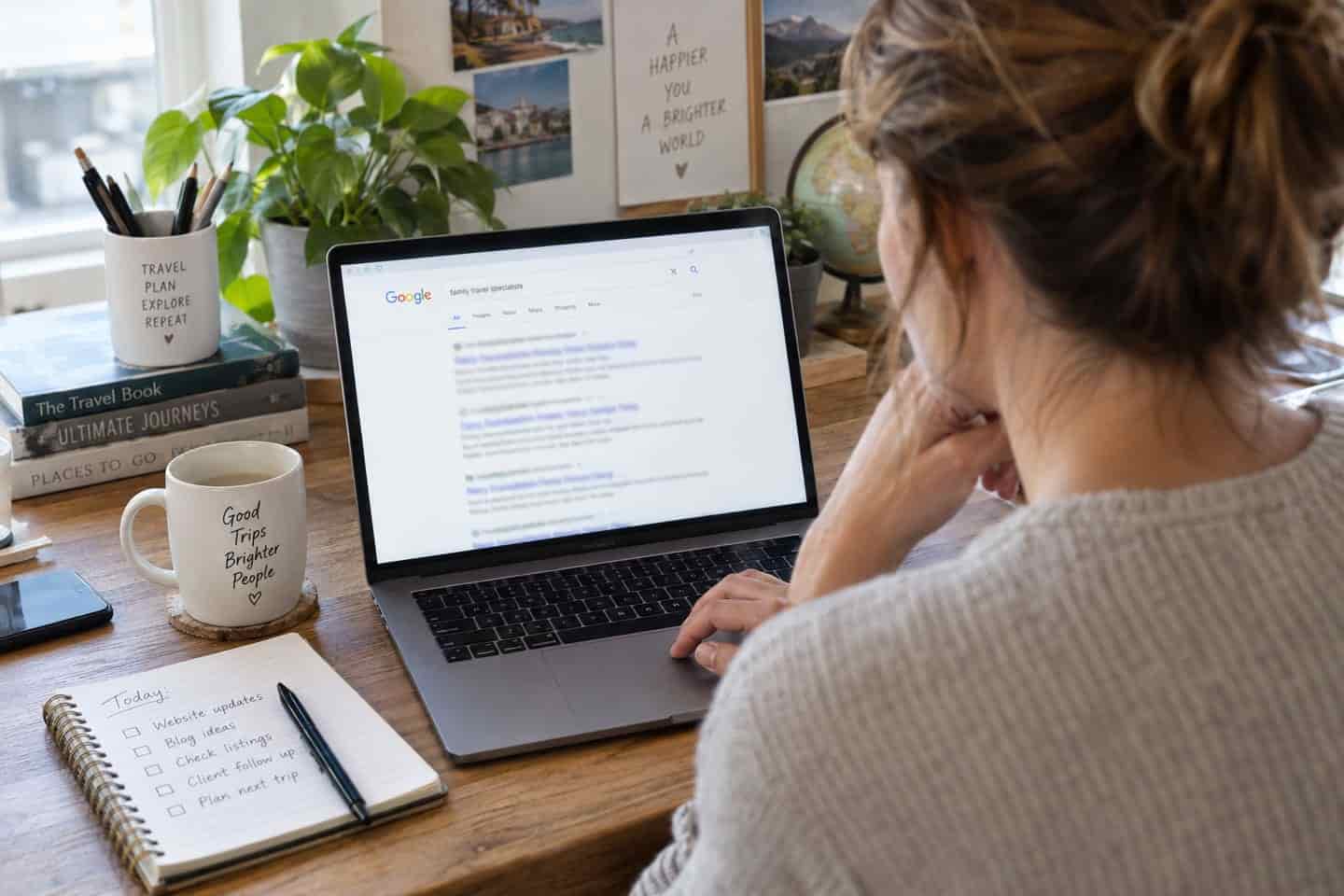
Start with two checks: can Google find and index your site, and does it contain useful answers to what your clients actually search for? A site that only says what you do may leave those questions unanswered. Useful pages, credible business information and a technically accessible website all matter. Before you spend a month on it, though, there is something you should know: SEO can be one of the slowest lead sources to build from scratch.
That is not a reason to skip it. It is a reason to be honest about where it sits in the order of things, because advisors lose entire quarters to website work that was never going to produce a booking in the timeframe they needed one.
The honest version of how long this takes
Treat six to twelve months as a planning allowance before SEO may produce a meaningful number of inquiries, and longer if your site is new. That is not a guarantee or a universal timetable. Google's SEO Starter Guide notes that results vary, and its guidance on whether you need SEO warns that no one can promise indexing, rankings or a specific number of leads. SEO needs time for pages to be found, crawled, indexed and assessed alongside the rest of the search results.
What this means practically is that SEO is something you start early and review steadily, not something you rely on when you need bookings this month. If your problem is that you have no clients right now, prioritize outreach, referrals and direct conversation instead. If your problem is that you are tired of every lead coming from effort you personally expend, SEO is one of the things that can eventually reduce that dependence.
Lead generation for travel advisors covers the faster, relationship-based side of finding clients.
What Google actually needs from a travel agency site
Three useful areas to work on, alongside the technical basics below.
Pages that answer a specific question. A homepage, an about page, a services page and a contact page are useful foundations and can rank. But they may leave the specific planning questions your clients search for unanswered. Build useful content around those topics, with enough detail to help someone make a decision. Closely related questions can belong on the same page; you do not need a separate page for every keyword variation.
Evidence that you are a real business. Consistent name, address and contact details wherever they appear online. If you have genuine in-person contact with customers, an eligible Google Business Profile, properly filled in. Google Business Profiles are for businesses that meet customers in person, and online-only businesses are not eligible. A service-area business can hide its address, but it still needs to serve customers in person. Google's Business Profile eligibility guidance and address and service-area guidance explain the boundaries. A business without a website may still appear through an eligible Business Profile, but it cannot build owned-content SEO visibility without a site it controls. Reviews, because they are one of the few signals a small local business can build quickly. An about page that reads like a person wrote it about a real business.
A reason for other sites to mention you. This is the hard one and it is what separates sites that rank from sites that simply exist. Suppliers, local press, industry publications, podcasts, partner businesses. Every mention with a link can help people discover you and can support your site's authority, but links are not a guarantee of rankings.
The technical side matters too, but it is not the only thing that matters and it is not one-and-done. Keep your site crawlable, fast enough to use on a phone, clear about what each page is for, and free of accidental instructions that block search engines. Review technical issues as the site changes instead of treating one audit as a permanent fix.
Your niche is the biggest SEO advantage you have
This is the part that genuinely changes outcomes, and it is where most travel agency SEO advice goes wrong by telling you to chase broad terms.
Broad terms such as "travel agent" are highly competitive and rarely the best starting point for a small site. A more useful opportunity is the intersection of what you sell and who you sell it to, expressed the way your client would say it. Not just "luxury travel" but the specific trip, for the specific person, in the specific place. A narrower phrase can give you a better chance of answering a real client's question well.
The counterintuitive part is that low search volume is fine. A page that brings you four genuinely qualified inquiries a year from people who described exactly the trip you specialize in is worth more than a page that brings four hundred visitors who wanted something you do not sell. Volume is a vanity measure in a business where one client can be worth thousands.
So start by writing down ten specific things you actually sell and phrasing each as a question a client would type. Group overlapping questions into useful topics, then decide which need a new page and which belong on a page you already have. That gives you a focused content plan rather than a collection of near-duplicate pages.
How to grow a travel agency covers the business decisions that make a niche useful rather than theoretical.
The technical bits that actually matter
Short list, because the list of technical things that do not matter is much longer and you will be sold most of them.
Your site needs to load quickly on a phone, because that is where much of your traffic is and slow pages lose people before they read anything. Every page needs a descriptive title that helps people and search engines understand the page. Every page needs a useful meta description, because Google may use it in the search result, but it can choose other page text instead. Headings should describe what is in each section rather than being decorative. Informative images need descriptive alt text for people using screen readers; purely decorative images should have empty alt text so they can be skipped.
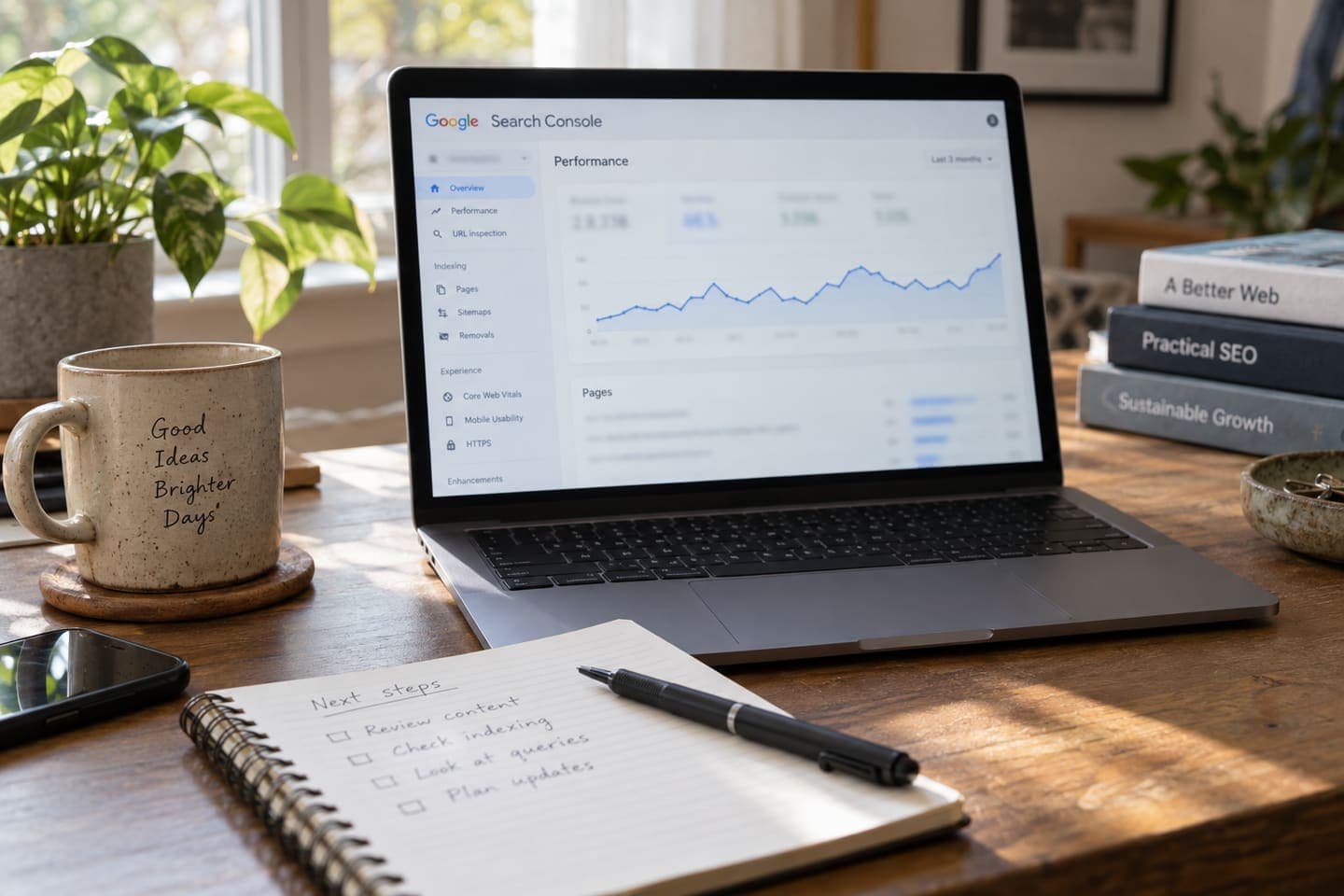
Your site needs to be findable through crawlable links, with no accidental instruction telling Google to stay away. A sitemap submitted to Google Search Console can help Google discover your pages, although it does not guarantee indexing. Set up Search Console if you have not, because it is free and it is the best place to see a sample of the queries and impressions associated with your site. It does not show every query, and its reports are not a complete record of every search.
Those are a useful starting point, not a complete technical audit. Fix specific issues that Search Console or a qualified review identifies rather than buying a long list of improvements without knowing which problem they solve.
How to know whether it is working
Not by checking your rankings, which will move around daily and tell you very little. Look at two things in Search Console instead: the number of different queries your site appears for, and the number of impressions. Both should trend upward over months, well before clicks do. That is an early signal that Google is starting to understand what you are about, not a promise that inquiries will follow on a fixed schedule.
Clicks and inquiries come later, and they come from a small number of pages rather than evenly across the site. When a page starts working, the right move is usually to make that page better rather than to write five more.
When SEO is the wrong thing to work on
If you need bookings this month, this is not your lever, and building a website is one of the most comfortable ways to avoid doing the uncomfortable thing that actually produces clients.
If you have fewer than about five past clients, you have a bigger opportunity in going back to them and to the people they know than in anything a search engine will do for you in the next year.
If you have not yet decided what you specialize in, you cannot build the pages that rank, because the pages only work when they are specific. Decide first.
And if you already have a steady flow of inquiries from referrals and social, SEO is the right next thing, because it is the one that keeps working while you sleep.
Common questions
How long does SEO take for a travel agency?
Treat six to twelve months as a planning allowance before SEO may produce a meaningful number of inquiries, and longer for a brand new site. It is not a guarantee or a universal timetable. Impressions in Search Console can start moving before clicks do, which is an early sign that your site is becoming more visible.
Do travel agents need a website to rank on Google?
Not necessarily. An eligible Google Business Profile or a third-party listing can appear without your own website. A site you control lets you publish helpful pages, measure visits and give prospective clients a clear next step. You can still build a business through referrals, social and direct outreach while developing that owned search presence.
Should I pay someone to do SEO for my travel agency?
Only once you know what you specialize in and you have a site worth improving, because otherwise you are paying someone to optimize a page that should not exist yet. When you do hire, be careful of anyone promising rankings, indexing or a timeline, because none can be promised.
What should I write about to rank?
Start with specific questions about the trips and clients you serve. Group overlapping questions into useful topics, then build or improve pages that answer them clearly. You do not need a separate page for every keyword variation. Add your direct experience, explain trade-offs and give the reader a practical next step.
Is blogging worth it for a travel agency?
It is, when the posts answer questions your clients ask rather than simply describing destinations. Destination content competes with the entire internet. Question content can reach someone at the moment they are trying to make a decision, especially when it reflects the specific niche you serve.
Does my Google Business Profile matter if I work from home?
Only if your business is eligible. Google Business Profiles are for businesses that have genuine in-person contact with customers. A service-area business can hide its home address, but an online-only business is not eligible. If you do meet customers in person, a complete and accurate profile can support local visibility.
Talk to us
SEO is worth building, and it is almost never the thing that fixes a slow month. If you are not sure which of those situations you are in, that is a twenty minute conversation.
Or start with the free resources if you would rather work through it yourself.


Oliver Catt ran Learning and Development for Unique Vacations, the worldwide representative for Sandals and Beaches Resorts. Alexandra Catt built her own travel business to six figures in its first year. Together they run Coaching Agents Through Travel, a business training community for independent travel advisors across the US and Canada. They are not a host agency and they do not recruit advisors.