I started Coaching Agents Through Travel (CATT) because I lived the chaos: juggling referrals, clients, and a dozen half-finished marketing ideas. I’ll be blunt, digital marketing for travel agency owners doesn’t have to be flashy or expensive. In this outline I walk you through a small, human-friendly system: pick a niche, choose a starter stack (mostly free), create repurposable content, set up a simple lead magnet and email sequence, then measure just a few numbers. I promise: one clear toolkit, one key call to action, and a weekly step forward beats frantic platform-hopping every time.
1) Mindset, Niche & the ‘Less is More’ Approach
As the founder of Coaching Agents Through Travel (CATT), I see the same challenge in so many travel businesses : you’re trying to do all the things, website, Instagram, Facebook, email, ads, while still serving clients. That’s why I teach a simple truth about digital marketing for travel agency owners: less is more when it’s focused on real goals like enquiries, bookings, and repeat business.
Pick one niche (and one ideal client) so every decision gets easier
Step 1 in my 7-step system is to clarify your niche and ideal client. This is also the fastest way to improve travel agency marketing results, because your message becomes specific. Research and real-world results both point to this: a clear niche + a website built for enquiries typically increases conversion rates, because visitors instantly know they’re in the right place.
Quick example: instead of “I book travel,” choose “luxury river cruises for retirees” . That single choice guides:
SEO topics (river cruise packing lists, cabin tips, best months to sail)
Your landing page headline and enquiry form
Your ad targeting and your content tone (calm, clear, trust-building)
Adopt a “move-the-needle” mindset
When an agent tells me, “I’m not techy,” I remind them: you don’t need to learn everything. You only need to learn what increases enquiries or bookings. Social media profiles now act like search engines for travelers, so you don’t need to be everywhere, you need to be findable and clear on 1–2 platforms (Step 3).
Batch and repurpose: one idea becomes everything
Consistency beats sporadic posting. I recommend one main offer and one call to action to reduce decision fatigue. Batch one strong idea and repurpose it like this:
One blog post on your niche topic
4 social posts pulled from that blog
One email snippet that links back to the post
I once coached an agent who doubled enquiries by switching from broad travel tips to a single niche landing page and a focused Instagram bio. Same effort, better focus, better results in digital marketing for travel agency growth.

2) Tools & a Starter Stack (Free First, Upgrade Later)
When I’m teaching digital marketing for travel agency owners, I always start with this truth... You don’t need a huge budget, you need the right travel business tools in the right order. Free tools can handle most of the heavy lifting: planning, basic design, and simple tracking. Then you upgrade only when your lead flow (and your time pressure) grows.
My free starter stack (does 80% of the work)
ChatGPT (free tier) : brainstorm content ideas, write first-draft captions, FAQs, and email copy. I use it to turn one blog topic into 10 posts.
Google Gemini (free) : research and outlines—great for comparing destinations, spotting trends, and mapping a month of themes.
Google Analytics + Search Console : see what pages bring traffic and which keywords drive clicks, so you stop guessing.
Google Business Profile : local credibility, reviews, and visibility—even if you’re home-based.
Canva (free plan) : clean graphics for posts, lead magnets, and simple promos.
One key insight I’ve seen (and research backs this up): AI for travel marketing can improve results because it helps you adjust faster, testing angles, rewriting offers, and optimizing campaigns in near real time. Some 2025 case studies even show AI-enabled campaigns driving up to 300% booking growth and $1.2M added revenue in certain agencies.
"AI scales output, but your voice sells the trip. Use it for drafts, not the final pitch." — Alex Kim, Travel Marketing Consultant
Upgrade only where it matters
ChatGPT/Gemini premium : saved prompts, more context, and bulk content creation.
Email platform (ConvertKit, MailerLite, or Flodesk): automation, tags, segmentation, and landing pages.
Simple CRM : track enquiries → calls → quotes → bookings, so you know what marketing actually sells.
Pick one starter stack (don’t buy everything)
Website or landing page + enquiry form
Email provider (even a basic plan)
One social scheduler (when batching gets hard)
Free AI + free analytics tools
Real-life tip: I’ll sit down once, use AI to draft 4 weeks of content , then edit it to sound like me. That’s how you stay consistent without living on your phone.
If you are looking for more tips they can be found here:
Digital marketing for travel agency: A guide from experts

3) Content That Converts: Repurpose, Don’t Reinvent
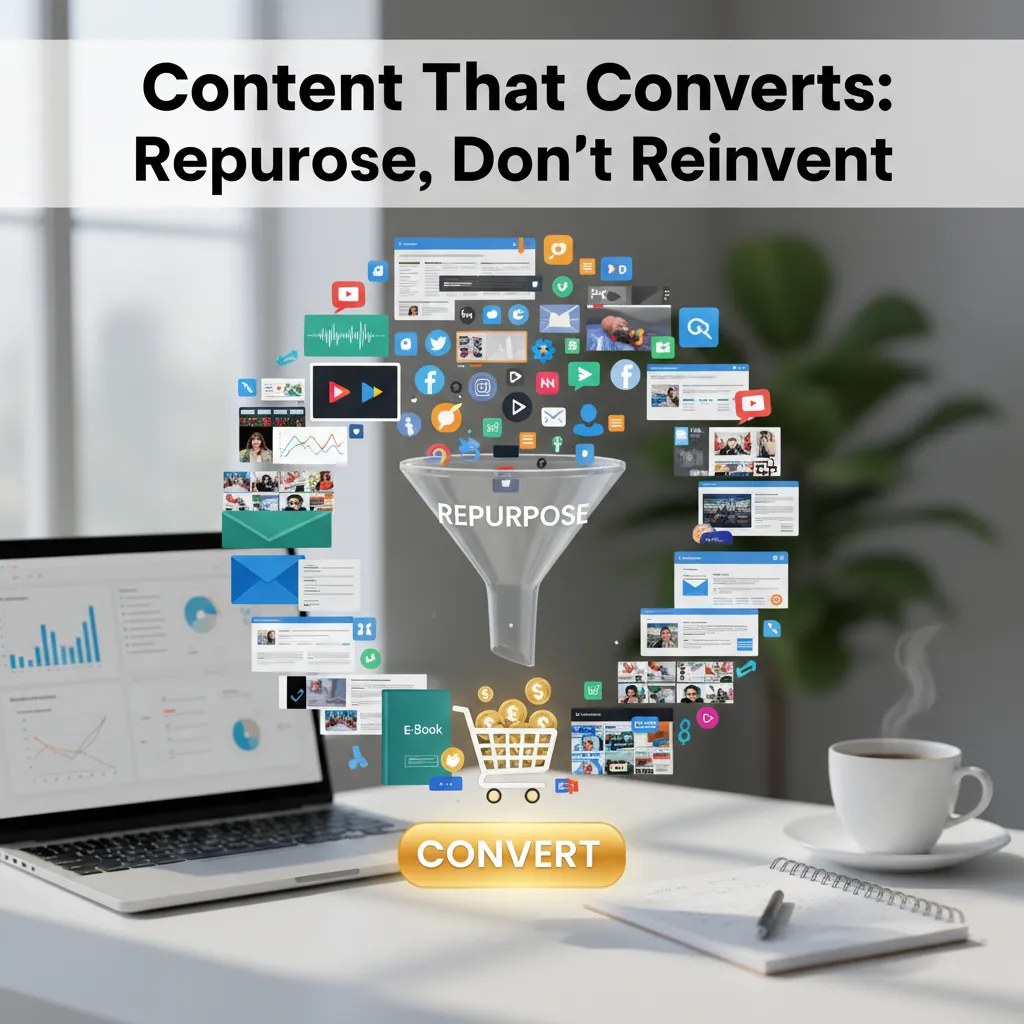
When I’m coaching agents, I see the same problem: you’re trying to do Content Marketing on every platform, and it turns into a full-time job. My fix is simple, create one core piece of content each month (a blog post or guide), then slice it into smaller pieces for Social Media Marketing , email, and your website. Repurposing preserves your voice and multiplies your reach with minimal extra work.
"Turn one idea into a dozen pieces of content. It’s efficient and keeps your message consistent." — Oliver Catt, Founder, Coaching Agents Through Travel
My Monthly Repurpose Plan (Built for Real Travel Marketing)
Start with one long-form blog post that supports your SEO Strategies . Travel SEO favors seasonal and destination keywords (a big 2025 trend), so write around what people are searching right now. Think “spring break Caribbean adults-only,” “Alaska cruise packing list,” or a focused keyword like digital marketing for travel agency if you’re speaking to other advisors.
1 core blog post or guide (your “source” content)
4–8 social posts pulled from key points
1 Instagram Story series (3–7 frames: tip, proof, CTA)
1 LinkedIn post (more professional angle: process, results, partnerships)
2 emails (one value email + one invitation to book)
Content Types That Actually Convert
Destination spotlights (who it’s best for + best time to go)
Mistake stories (be real: “what I’d do differently next time”)
Behind-the-scenes planning and supplier research
Client wins (results, upgrades, smooth travel days)
FAQs + objections (pricing, passports, insurance, timing)
Platform + CTA Strategy (Keep It Simple)
Pick 1–2 main platforms : Instagram + Email, LinkedIn + Instagram, or Facebook + Email. Instagram and TikTok excel for visual Travel Marketing , and short videos consistently boost engagement—so turn one blog tip into a 15–30 second reel.
Use one clear CTA everywhere (same landing page or booking call). If you use AI, keep your tone consistent with a brand voice prompt like:
Write in my friendly, practical travel advisor voice. Simple language.
Confident, not salesy. End with one clear CTA to book a call.
4) Lead Generation, Automation & Measuring What Matters
Lead Generation: start with a simple lead magnet
If I could only set up one thing for consistent Lead Generation , it would be a lead magnet plus an email capture form. Keep it practical: a “Pack Like a Pro” checklist, a mini-guide for your niche (Disney, river cruises, destination weddings), or a “What It Really Costs” budget planner. The goal is simple: capture the email , then guide them toward a call.
Your landing page should do one job: explain who you help, what the freebie is, and what happens next. I don’t run Paid Advertising until this page and the emails are ready—otherwise you’re paying for clicks that go nowhere.
Automation: welcome, nurture, then ask for the call
Once someone downloads your freebie, automation keeps you consistent even on busy booking days. I like a short welcome/nurture sequence (5–7 emails over 10–14 days): quick wins, common mistakes, a client story, and a clear invitation to book a consult.
My favorite simple call-to-action is:
Reply with “PLAN” and I’ll send my planning link.
It feels personal, but it’s still streamlined.
Paid Advertising: test small after your system is ready
When your landing page and emails convert, test small Facebook/Instagram lead ads. Start with one audience and one offer. This is where AI-driven targeting is showing big upside, industry findings (2025) report some agencies seeing 300% booking increases and $1.2M added revenue when targeting and follow-up are dialed in.
Conversion Tracking, SEO Performance & monthly KPIs
"Measure the few things that actually pay the bills. If it’s not tied to enquiries or bookings, don’t obsess over it." — Alexandra Catt, Founder, Coaching Agents Through Travel
For Conversion Tracking and SEO Performance , I use Google Analytics and Google Search Console, plus a CRM or simple spreadsheet to track leads to bookings.
Starter KPI | Monthly Target |
|---|---|
Website sessions | 100 |
Email signups | 10 |
Calls booked | 2 |
Each month, I review: website visits, enquiries, email signups, calls booked, and bookings made—then tweak one thing (headline, email subject lines, or ad creative) and run it again.
5) Community, Coaching & Next Steps (CATT in Practice)
If you’ve made it this far, you already have what most Travel Agencies need: a simple system and the right mindset. The hard part isn’t learning more Travel Marketing tips, it’s implementing the Digital Marketing Strategies you’ve chosen, even when client work, supplier emails, and life pull you in ten directions.
"The difference between knowing and doing is a tiny bit of accountability and a clear checklist." — Oliver Catt, Founder, Coaching Agents Through Travel
That’s exactly why I created Coaching Agents Through Travel (CATT) . It’s a community and coaching space built for real travel advisors who want practical support, not pressure. Inside CATT, I offer trainings that walk you through the core system. We offer focused power hours when you need fast progress, actionable templates you can plug into your business, and accountability that helps you follow through. Think of it as implementation help for the exact approach you’ve been reading about, website and SEO basics, content and social, email nurture, simple automation, and tracking what works.
If you’re feeling stuck, one focused coaching hour can change everything. We can set up your starter stack (so your tools actually talk to each other), draft a month of content with feedback, build your email welcome sequence, or do a quick audit of your Google Business Profile so you show up stronger in local search, even if you’re home-based.
You can find out contact details on our home page: Coaching Agents Through Travel - C.A.T.T
Next Steps Checklist for Travel Agencies (Keep It Simple)
Here’s what I recommend you do next. In order: pick (or tighten) your niche and ideal client, update your main landing page so it captures enquiries and email signups. Choose 1–2 platforms you can stay consistent on, create one lead magnet that solves a real problem, draft one month of content you can repurpose, and set a monthly analytics review so you know which Digital Marketing Strategies are creating calls and bookings. Then, when you’re ready, test a small paid lead campaign and track it end-to-end.
If you want support implementing this without overwhelm, CATT is here, supportive, optional, and built to help you turn good intentions into booked trips.
TL;DR: Pick a niche, use free AI and simple tools, focus on 1–2 platforms, create a lead magnet + email sequence, test ads later, and measure a few key metrics.
